Can You Get a Medical Card for Anxiety? Qualifying Conditions Explained
by Areeba Imran · June 10, 2026
Anxiety can make everyday life feel harder than it should. Racing thoughts, constant worry, lousy sleep, panic attacks—they mess with work, relationships, and how you feel overall. If the usual treatments haven’t done much for you, you might be wondering: Can I actually get a medical card for anxiety? It depends on where you live….
- Some states list anxiety as a qualifying condition. Others don’t. Check your state’s rules first.
- Research suggests cannabinoids may ease stress and support relaxation for some people.
- CBD tends to feel calming. High THC doses can make anxiety worse in some individuals.
- A healthcare provider can help you pick safer products and dial in the right dose.
- Most providers say to begin low and increase gradually. Patience pays off.
- Lower taxes, stronger products, and trained staff come with a medical card.
- THC may increase anxiety at higher doses. Dry mouth, dizziness, and sleepiness can happen too.
- Always double-check your state’s current requirements before you apply.
Anxiety can make everyday life feel harder than it should. Racing thoughts, constant worry, lousy sleep, panic attacks—they mess with work, relationships, and how you feel overall. If the usual treatments haven’t done much for you, you might be wondering: Can I actually get a medical card for anxiety?
It depends on where you live. Some states let anxiety qualify for medical certification. Others only approve related conditions like PTSD. Either way, plenty of patients keep looking into MMJ for anxiety as part of a bigger wellness plan.
Research suggests certain cannabinoids may support relaxation, stress relief, and sleep for some people. But responses vary, and getting medical guidance before you start matters.
This guide covers how anxiety laws work, which states may approve medical certification anxiety cases, what the science says about plant medicine anxiety relief, and how you might qualify for a card.
Understanding Anxiety Disorders
Everyone feels stressed sometimes. Cannabis is surprisingly really good for mental health issues. Anxiety disorders are a different thing entirely. They involve ongoing fear or worry that gets in the way of daily life.
The National Institute of Mental Health says anxiety disorders are among the most common mental health conditions in the country.
Common anxiety disorders include:
- Generalized anxiety disorder (GAD)
- Panic disorder
- Social anxiety disorder
- Phobias
- Separation anxiety disorder
- Anxiety linked to PTSD
Symptoms look different for every person. Some people deal with constant nervousness. Others get hit with physical symptoms like a racing heart or tight muscles.
Common Anxiety Symptoms
Symptoms may include:
- Racing thoughts
- Restlessness
- Panic attacks
- Muscle tension
- Trouble sleeping
- Fast heartbeat
- Irritability
- Difficulty concentrating
- Feeling overwhelmed
- Avoiding social situations
Some patients manage symptoms with therapy or prescription meds. Others also explore wellness-based approaches, including MMJ.
How Medical MMJ Programs Work
Medical MMJ programs are regulated at the state level. Every state writes its own rules, picks its own qualifying conditions, and sets up its own application process.
Most medical programs require:
- A qualifying medical condition
- An evaluation by a licensed physician
- State registration
- Annual renewal fees
Unlike recreational access, medical programs are built around patient care and symptom management.
| Feature | Medical MMJ Program |
| Doctor evaluation required | Yes |
| State registration required | Usually |
| Anxiety approved everywhere | No |
| Annual renewal needed | Often |
| Access to medical dispensaries | Yes |
| Legal protections may apply | Depends on the state |
The National Conference of State Legislatures confirms that qualifying conditions and regulations vary a lot from state to state.
Is Anxiety a Qualifying Condition?
This is one of the biggest questions patients ask: Does anxiety actually count?
The answer’s complicated because every state handles it differently.
Some states directly list anxiety as an approved condition. Others only allow severe anxiety tied to another diagnosis, like PTSD. And in certain states, doctors have the discretion to recommend MMJ when they believe a patient could benefit.
States That May Allow Anxiety Certifications
Some states that may allow anxiety-related approvals include:
- Pennsylvania
- New Jersey
- Oklahoma
- Utah
- California
- Missouri
- New Mexico
Laws change often, though. Some states limit approvals to severe cases or want proof that other treatments didn’t work. Always check your state’s current MMJ program before you apply.
Why Patients Explore MMJ for Anxiety
People look into MMJ for all kinds of reasons. Some want extra symptom support after trying other treatments. Others are looking for wellness-focused options that feel like a better fit for how they live.
Research suggests cannabinoids may interact with the body’s endocannabinoid system, which plays a role in mood, sleep, stress response, and emotional regulation.
Many patients report using MMJ to help with:
- Relaxation
- Better sleep
- Stress reduction
- Day-to-day calmness
- Physical tension relief
- Improved mood balance
That said, MMJ hits everyone differently. What helps one person may not do much for another.
How Cannabinoids May Affect Anxiety
The two cannabinoids people talk about most are THC and CBD.
CBD and Anxiety
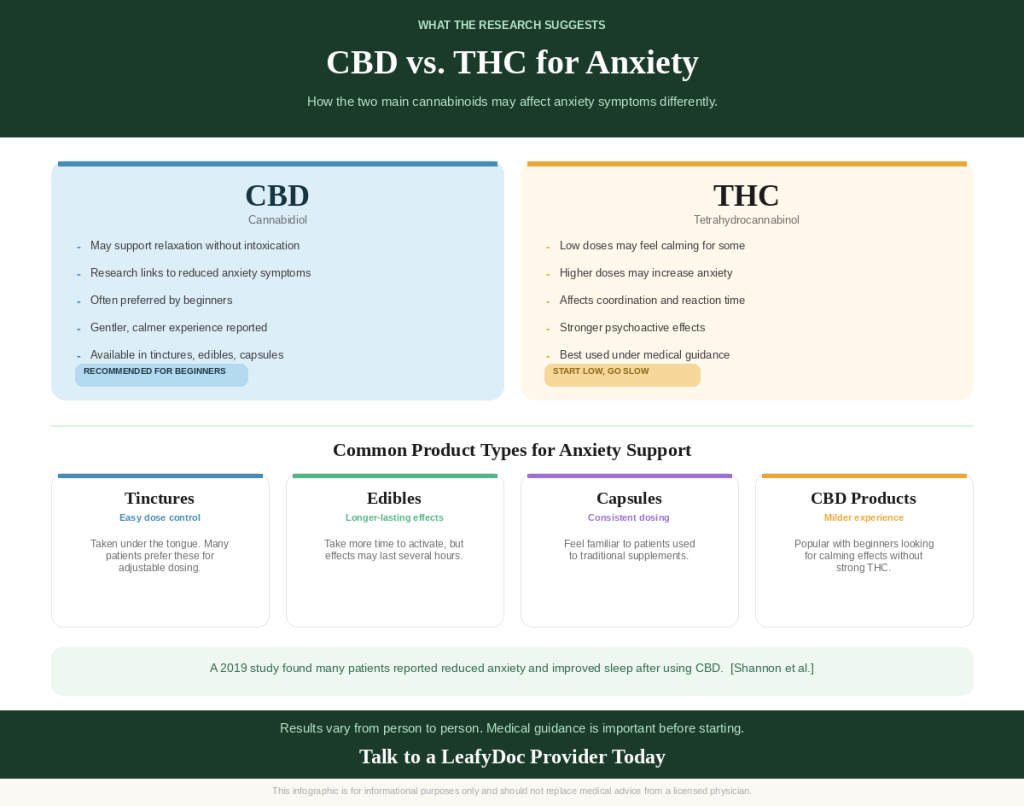
CBD is known for its calming effects without strong intoxication. Research suggests it may help support relaxation and stress management for some people.
A lot of beginners prefer CBD-focused products because they tend to feel gentler and less overwhelming.
THC and Anxiety
THC works differently. At low doses, some patients say they feel calmer or more relaxed. But higher THC doses can actually make anxiety worse in certain people.
That’s why so many experts recommend starting low and bumping up slowly if needed.
Balanced Products
Some patients prefer products with both THC and CBD. Balanced formulas may tone down some of THC’s stronger psychoactive effects.
Finding the right balance usually takes time, patience, and guidance from a provider.
What the Research Says About MMJ and Anxiety
The research on cannabinoids and anxiety is still growing, but several studies have turned up encouraging results.
A 2019 study in The Permanente Journal found that a lot of patients reported less anxiety and better sleep after using CBD.
Another review in Neurotherapeutics noted that CBD showed potential for several anxiety disorders, including social anxiety and PTSD.
Researchers are still looking into:
- Long-term effects
- Ideal dosing
- THC-to-CBD ratios
- Delivery methods
- Side effects
- Patient safety
Early results look promising. But scientists agree: more large-scale clinical studies are still needed.
Common Product Types for Anxiety Support
Patients exploring plant medicine anxiety relief have a few product options to choose from.
Tinctures
Tinctures are liquid extracts you take under the tongue. Patients like them because you can fine-tune the dose pretty easily.
Edibles
Edibles tend to last longer, but they also take more time to kick in. Plan ahead.
Capsules
Capsules give you a consistent dose every time. They feel familiar if you’re used to taking supplements.
Vape Products
Some patients go with inhaled products because they work fast. The trade-off is that effects may wear off quicker. Vaping seems to be the perfect choice for such patients.
CBD Products
CBD-heavy products are popular with beginners who want milder effects without a strong high.
How to Get a Medical Card for Anxiety
The exact process depends on your state, but most programs follow similar steps.
1. Review State Eligibility Rules
Start by checking whether anxiety or a related condition qualifies where you live.
2. Gather Medical Information
Some providers will ask about:
- Anxiety symptoms
- Previous treatments
- Current medications
- Therapy history
- Sleep issues
- Stress levels
3. Schedule a Medical Evaluation
A licensed healthcare provider reviews your symptoms and medical history.
4. Receive Your Recommendation
If approved, you’ll get medical certification paperwork.
5. Register With the State
Most states need you to complete online registration and pay a fee.
6. Visit a Medical Dispensary
Once you’re approved, you can purchase products from licensed dispensaries.
Medical vs Recreational Access for Anxiety
Even in states with recreational access, a lot of patients still go the medical route. Why?
Medical programs may offer:
- Lower taxes
- Higher purchase limits
- Access to stronger products
- Better patient guidance
- Medical-focused product options
- Legal protections in some states
Patients dealing with ongoing symptoms often prefer the structure and support that comes with a medical program.
|
Medical Access |
Recreational Access |
|
Patient-focused guidance |
General adult use |
|
Higher purchase limits |
Lower limits |
|
Lower taxes in some states |
Higher taxes |
|
Access to medical products |
Consumer-focused products |
|
Healthcare evaluation required |
No medical review |
Risks and Side Effects to Know
MMJ isn’t right for everyone. Possible side effects include:
- Dry mouth
- Dizziness
- Sleepiness
- Increased heart rate
- Temporary memory problems
- Anxiety increases from high THC doses
The CDC also notes that THC may affect coordination, attention, and reaction time.
Who Should Be Extra Careful?
Take extra caution if you’re:
- Pregnant
- A teen or young adult
- Someone with a history of psychosis
- Sensitive to THC
- Taking certain prescription medications
Always talk to a licensed healthcare provider before starting MMJ.
Tips for Beginners Exploring MMJ for Anxiety
Starting slow is the most common advice beginners get. Here’s the short list:
Start Low and Go Slow
Most providers say to begin with a very low dose. Increase gradually if you need to.
Track Your Symptoms
Keep notes on how different products make you feel. It helps you figure out what actually works.
Avoid High THC Products Early
Strong THC products can feel overwhelming when you’re just getting started.
Consider CBD-Heavy Products
A lot of patients begin with higher-CBD formulas because they’re usually more manageable.
Talk With a Healthcare Provider
Professional guidance matters—especially if you take prescription meds or have other health conditions.
Why Some Patients Prefer Medical Certification
For a lot of patients, getting a medical card isn’t just about product access. It’s about structure, support, and knowing what you’re getting.
Patients often appreciate:
- Better product education
- Medical-focused dispensaries
- Reliable dosing information
- Access to specialized products
- More personalized recommendations
Some patients also say the medical setting feels more comfortable than a recreational store.
Limitations Worth Understanding
Medical programs come with responsibilities, too.
You may need to:
- Pay annual fees
- Renew certifications regularly
- Follow state possession limits
- Keep your state registration current
- Understand local laws
Job protections vary widely by state. Even with a medical card, your employer’s workplace policy may still restrict MMJ use.
The Bottom Line
Anxiety can mess with your sleep, your focus, your relationships—pretty much everything. Traditional treatments help a lot of people. But others keep exploring additional wellness options for symptom support.
Research suggests cannabinoids may help some patients manage stress, relaxation, and sleep problems tied to anxiety. Results vary, though, and medical guidance still matters.
If you’re thinking about a medical card for anxiety, the best move is understanding your state’s laws and talking with a licensed provider. LeafyDoc can connect you with providers who know the medical certification process and can walk you through it.
Feeling Anxious? Let’s Get Your MMJ at LeafyDoc
Frequently Asked Questions
Can you get a medical card for anxiety?
Yes, some states allow anxiety as a qualifying condition. Others may only approve related conditions like PTSD. It depends on where you live.
How do I get proof of anxiety?
Any GP or therapist can diagnose as long as they have a checklist of symptoms.
Is anxiety a qualifying condition everywhere?
No. MMJ laws differ by state, and anxiety isn’t approved in every medical program.
Does CBD help anxiety?
Research suggests CBD may help support relaxation and stress management for some people. Scientists are still studying it.
Can THC make anxiety worse?
It can. Low doses may feel calming, but higher doses may ramp up anxiety in some individuals.
Do I need a diagnosis to qualify?
Usually, a healthcare provider reviews your symptoms and medical history before making a recommendation.
Can recreational products replace medical certification?
Some patients use rec products. But medical programs may offer lower taxes, trained staff, and products you won’t find on rec shelves.
How long does a medical card last?
Most states require yearly renewals, though the timeline varies.
Can beginners use MMJ for anxiety?
Some do, usually under medical supervision. Starting with low-dose or CBD-heavy products is the most common approach.
Last Updated: July 7, 2026
Get Approved for Your Medical Marijuana Card in Minutes!

Get Your Medical Card
Connect with a licensed physician online in minutes
- Cannabis and Cannabinoids: What You Need To Know, NCCIH, nccih.nih.gov
- Anxiety Disorders, NIMH, nimh.nih.gov
- State Medical Cannabis Laws, NCSL, ncsl.org
- Cannabidiol as a Potential Treatment for Anxiety Disorders, Blessing EM et al., PubMed
- Cannabis and Public Health, CDC, cdc.gov
- Cannabidiol in Anxiety and Sleep, Shannon S et al., PubMed
- Use of Cannabis for Anxiety Disorders, Skelley JW et al., PubMed
Like This Article?
Share with your friends
Table of Contents
Keep Reading
-
Experience Relaxation With Sativa Strains
Experience pure bliss and unwind with our relaxing Sativa strains. Click now to find your perfect strain and discover ultimate relaxation.
-
Finding The Best Cannabis Strains For A Good Night’s Sleep
Tired of restless nights? Uncover the top cannabis strains for a peaceful sleep and bid farewell to insomnia. Click here for your ticket to dreamland tonight!
-
Sativa vs Indica – Which one is right for me?
Curious about the differences between Indica and Sativa? Check out this blog post and discover the key distinctions between these two cannabis plant types.