
Medical Card vs. Recreational: Why Patients Still Choose Certification in 2026
by Areeba Imran · July 2, 2026
Walk into a rec dispensary, flash your ID, and you’re good. That’s the pitch, anyway. So a lot of people figure the medical card vs recreational debate is settled. Nope. Not even remotely related. In 2026, patients across the U.S. are still lining up for MMJ cards. Why? Because the medical track comes with real…
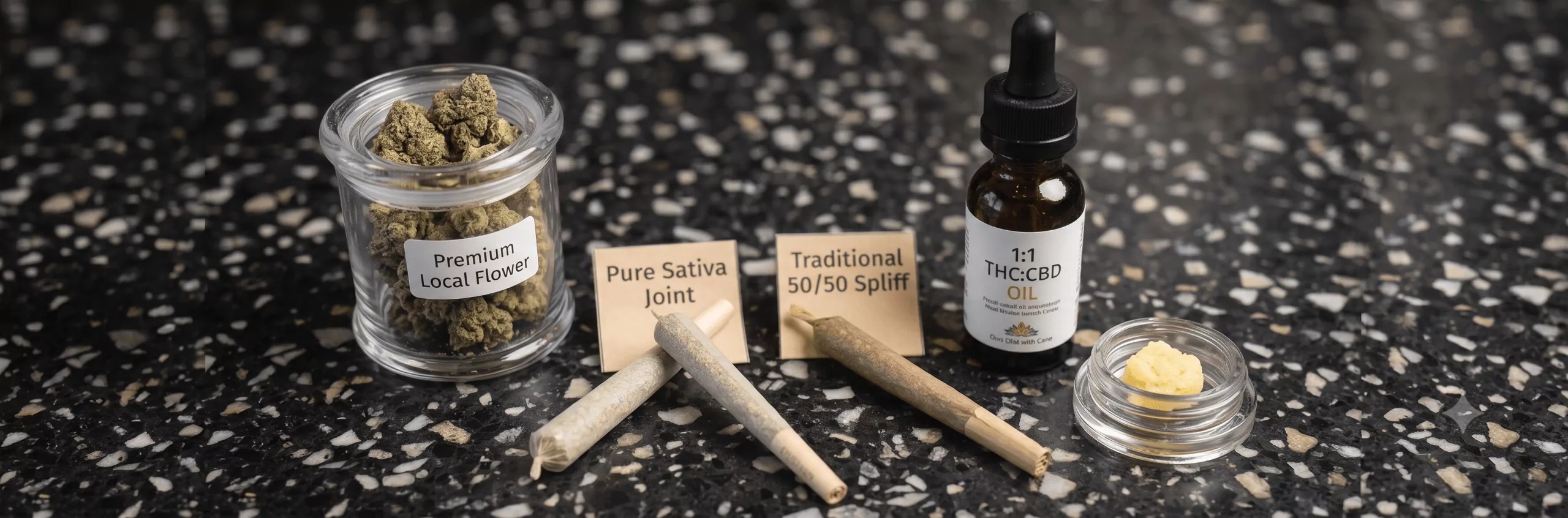
Walk into a rec dispensary, flash your ID, and you’re good. That’s the pitch, anyway. So a lot of people figure the medical card vs recreational debate is settled.
Nope. Not even remotely related.
In 2026, patients across the U.S. are still lining up for MMJ cards. Why? Because the medical track comes with real perks. Lower taxes. Stronger products. Higher buying limits. And care that’s built around your health, not just your weekend.
If you deal with chronic pain, PTSD, or something like cancer-related nausea, those perks aren’t small. They’re the whole point. One review found that structured medical programs help patients stick with safe, steady dosing over time.
Understanding Medical and Recreational MMJ Programs
Here’s the short version. Medical programs exist for people with a qualifying condition who get a doctor’s sign-off. Rec programs let any adult 21+ walk in and buy.
Both give you legal access. But the details are different—and those details add up fast.
| Feature | Medical Program | Rec Program |
| Doctor approval needed | Yes | No |
| Main purpose | Symptom relief | Personal use |
| Min. age | Usually 18+ | Usually 21+ |
| Tax rate | Often reduced | Higher |
| How much you can buy | Usually more | Less |
| Product focus | Therapeutic | General consumer |
The NCSL tracks these programs state by state. Their data show that most states intentionally keep medical and rec systems separate—patients simply need different things.
Why Get A Medical Card In 2026
Some do it for the savings. Others want products you can’t find on the rec side. And a good number just want a budtender who actually knows how to talk about dosing.
The most common reasons? Pretty straightforward:
- Lower taxes at checkout
- Better product selection
- Access to stronger options
- Trained staff who focus on your condition
- Extra legal protections in some states
A 2018 paper by MacCallum and Russo made the case that proper education and careful dose adjustments can cut side effects while getting better results. That kind of guidance is easier to find in a medical setting.
Patients with ongoing symptoms also like that medical products tend to be labeled for therapeutic use, not just flavor or potency.
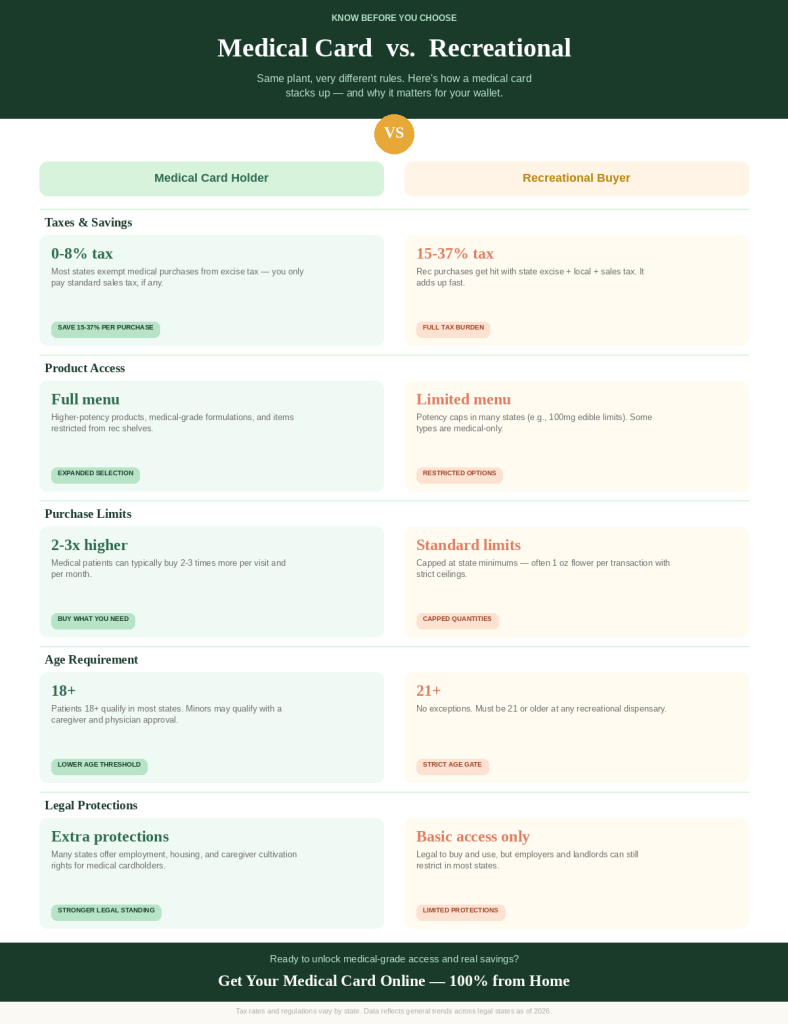
MMJ Card Benefits in 2026
There are many benefits of MMJ. Let’s break down the big ones.
Lower Taxes
This is the one people notice first. Rec products get hit with state excise taxes, local add-ons, and regular sales tax. Stack those up, and you’re paying a premium.
Medical patients? Many states cut them a break. The exact discount depends on where you live, but NCSL data confirms the gap is real. If you buy every month, the savings pile up.
Access to Medical Products
Medical shelves look different. You’ll find products built for specific needs:
- High-CBD blends
- Balanced THC-to-CBD ratios
- Capsules and tinctures
- Metered-dose options
- Low-dose edibles
The NCCIH says scientists are still studying how cannabinoids may help with pain, sleep trouble, and nerve-related symptoms. And MacCallum and Russo noted that the right ratio and delivery method can make a big difference from patient to patient.
Higher Purchase Limits
Most states let medical patients buy—and carry—more than recreational customers. That matters if you rely on plant medicine daily and don’t want to make weekly trips.
Some states also let medical cardholders buy higher-potency products that rec shops can’t stock.
Tax Savings With a Medical Card
Let’s put a number on it. In certain states, rec taxes clear 20% or more. Medical patients may dodge some or all of that.
The specifics vary. But patients who buy regularly say the tax savings medical card advantage more than covers the annual renewal fee. That’s the math most people end up doing—and it usually tips toward keeping the card.
Medical vs Recreational Dispensary Differences
Walk into a medical dispensary, and the vibe is different. Staff ask about your symptoms. Products are grouped by condition, not by brand hype.
Here’s how a medical vs recreational dispensary visit typically compares:
| Medical Dispensaries | Rec Dispensaries |
| Patient education | General adult shoppers |
| Therapeutic products | Lifestyle and novelty items |
| Consistent dosing info | Tourist-friendly layout |
| Stronger formulas | Easy grab-and-go access |
| Cannabinoid ratio focus | Wide variety, less depth |
Most clinical guidance—including the MacCallum and Russo paper—stresses “start low and go slow.” That’s easier to do when staff are trained to walk you through it.
Access to Higher Purchase Limits and Products
Bigger monthly limits. Higher-dose options. Specialized concentrates. These are things medical programs can offer that rec programs often cap or restrict.
The NCCIH notes that some patients with severe symptoms may need formulas you won’t find on rec shelves. And in several states, edible and concentrate potency is capped for rec buyers—but not for medical cardholders.
What the Studies Show About Medical MMJ
The science is still catching up. But what we know so far points in a clear direction.
Studies have linked cannabinoids to symptom relief for chronic pain, chemo-related nausea, muscle spasms, sleep problems, and anxiety. The CDC adds a caution: effects on coordination and reaction time depend on the dose and how you take it.
Your results may also shift based on THC and CBD levels, delivery method, your metabolism, and how often you use plant medicine.
Common Conditions That Qualify
Every state sets its own list. But you’ll see these names pop up almost everywhere:
- Chronic pain
- PTSD
- Cancer-related symptoms
- Epilepsy
- Multiple sclerosis
- Severe nausea
- HIV/AIDS
- Crohn’s disease
Chronic pain tops the list in nearly every state. NCCIH data backs that up.
Limitations Worth Knowing
No program is perfect. Medical cards come with annual renewal fees, paperwork, and state database sign-ups. Job protections also vary by state.
Read your state’s rules before you apply. The details matter.
Is a Medical Card Worth It in 2026?
If you only use plant medicine once in a while, rec access might be fine. But for patients who buy every month, need specific potencies, or want a dispensary that treats them like a patient instead of a customer, the card still pays off.
When thinking about why get a medical card, it usually comes down to a simple trade: a yearly fee versus tax savings, stronger products, and better support. For most regular patients, that trade works out.
The Bottom Line
Rec access is here. It’s easy. And for casual users, it’s probably enough.
But if you live with a condition that needs steady management, a medical card vs recreational comparison tips heavily toward the card. Lower taxes, stronger products, bigger limits, trained staff, and extra protections, those aren’t small perks. They’re the backbone of a real treatment plan.
Talk to a healthcare provider before you start. And if you’re ready to see what your state offers, LeafyDoc can walk you through the process.
Get Your MMJ Card in Minutes with LeafyDoc
Frequently Asked Questions
What does a Medical Marijuana Card look like?
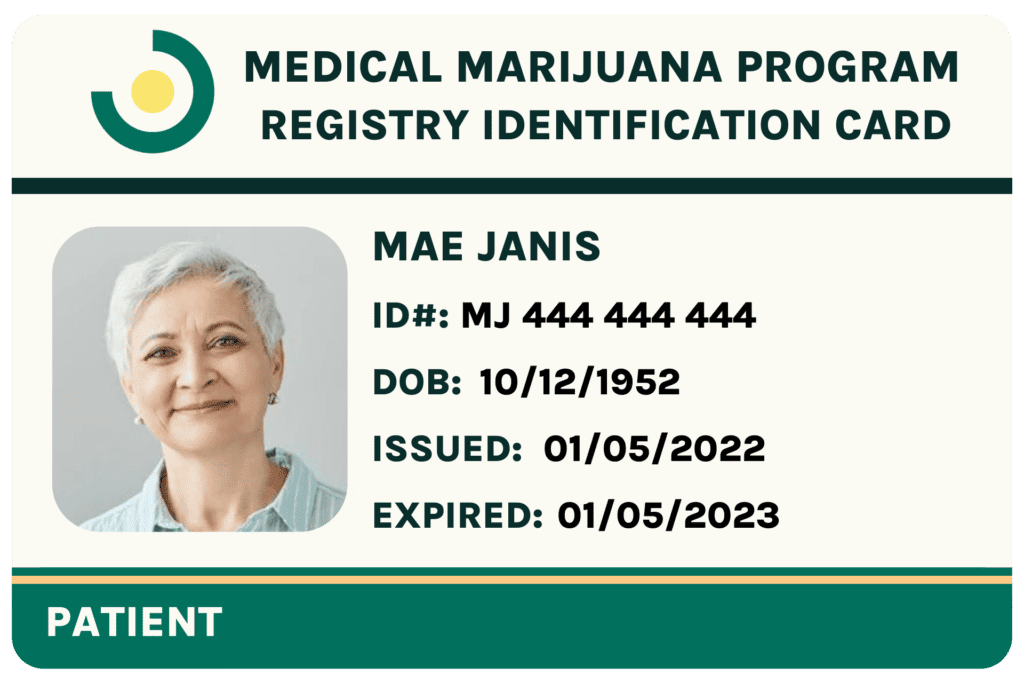
A medical marijuana card looks like a state-issued ID card and typically includes your full name, ID number, expiration date, and, in some cases, a photo. Some states give actual cards, while others offer virtual MMJ cards that users can use on their phones via a state portal or medicinal cannabis app.
What is recreational use?
Recreational use refers to the use of cannabis for your own pleasure rather than for medical treatment or symptom management under the supervision of a doctor.
Is medical access cheaper than recreational?
Usually, yes. Medical patients skip some or all of the taxes rec buyers pay. If you shop every month, the savings alone can cover what you paid for the card.
Can medical patients buy stronger products?
In many states, yes. Rec stores have potency caps on edibles and concentrates. Medical programs often lift those caps, giving patients access to higher-dose options.
Are medical dispensaries different from recreational ones?
They are. Medical shops focus on your symptoms, not just the sale. Expect more dosing guidance, condition-based product groupings, and staff trained to answer clinical questions.
Why do people still bother getting medical cards?
Lower taxes, better products, and real patient support. For anyone managing an ongoing condition, those benefits add up to something rec access can’t match.
Do I need a medical card if my state already allows rec use?
It depends on how often you buy and what you need. If you’re shopping monthly for specific products, the card usually saves money and opens doors to options rec stores don’t carry.
How long does a medical card last?
Most states make you renew every year. A few give longer windows. Check your state’s rules or visit LeafyDoc to see what applies where you live.
Last Updated: July 7, 2026
Get Approved for Your Medical Marijuana Card in Minutes!

Get Your Medical Card
Connect with a licensed physician online in minutes
Like This Article?
Share with your friends
Table of Contents
Keep Reading
-
How to Renew Your Medical Marijuanas Card Online in Florida: A Step-by-Step Guide
Easily renew your medical marijuana card online in Florida with our step-by-step guide.
-
Exploring The Relationship Between Cannabis And Weightlifting
Enhance Your Weightlifting Routine with Cannabis: Uncover the Surprising Benefits Today! Click to Learn More and Boost Your Gains!
-
Exploring The Functions Of The Endocannabinoid System
Unleash the Power of Your Body with Endocannabinoid System Functions! Uncover the Secrets and Discover Incredible Potential. Click Now to Explore and Tap into Your Hidden Powers Today!